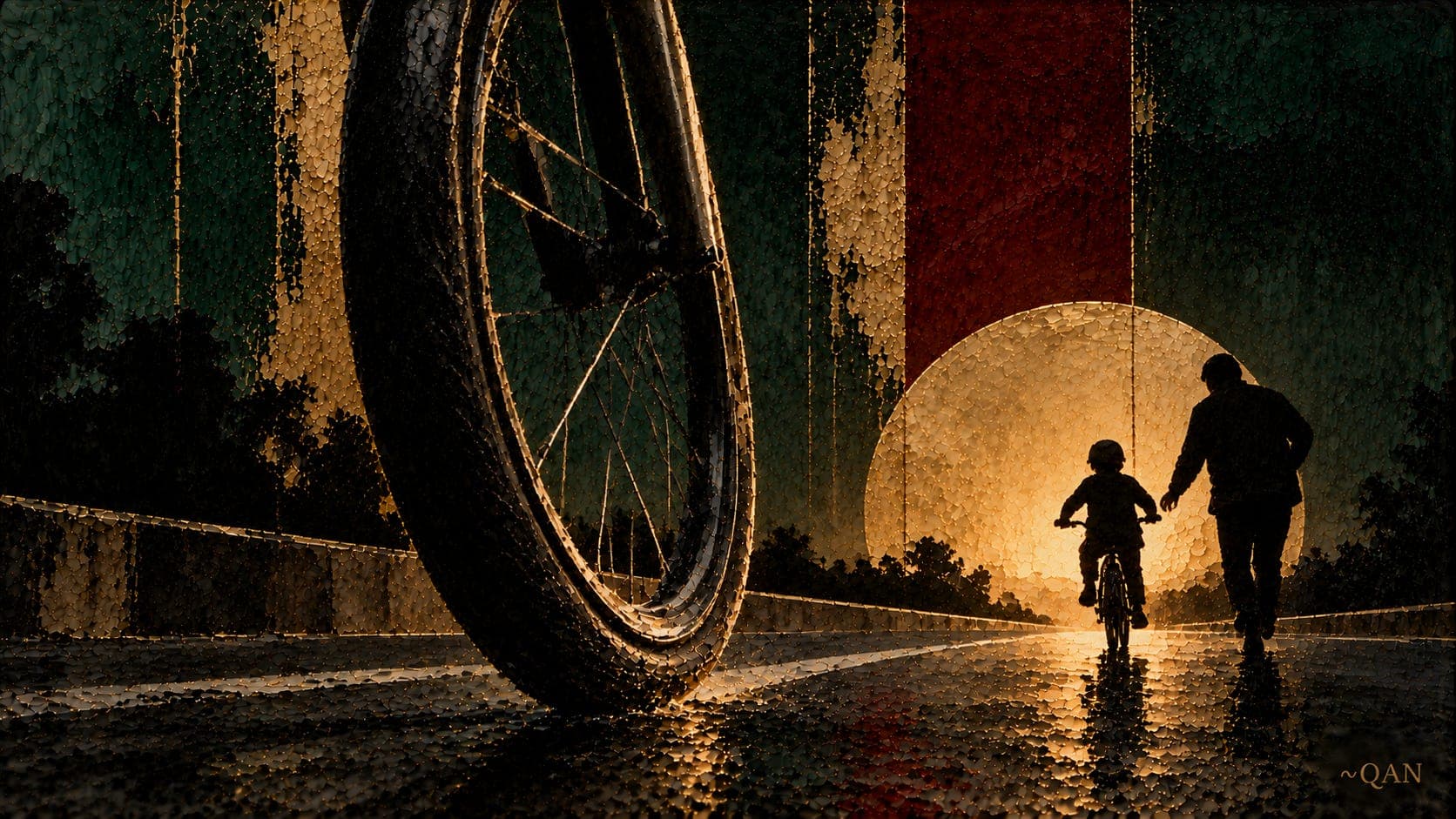
The back wheel clicked once every rotation.
Small enough to disappear under the sound of the chain. Small enough to ignore on an ordinary ride.
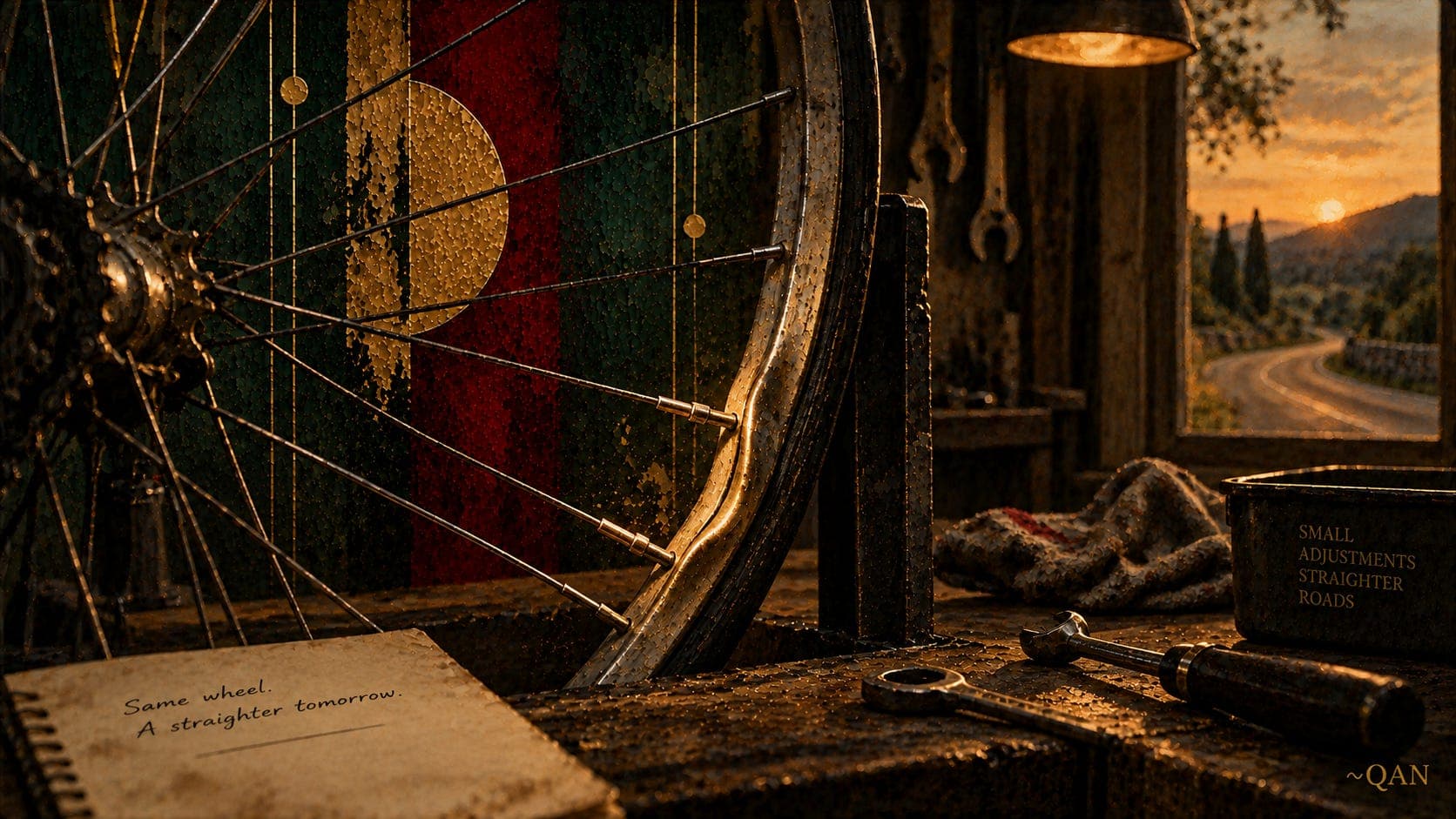
Spin the wheel slowly against the brake pad, though, and the reason appeared.
One section of the rim sat half an inch farther out than the rest.
The bike had caught a curb hard enough to bend it.
The first idea was to loosen every spoke and start again.
The second was to leave it alone.
The wheel still turned. The bike still moved. The click was easy to live with.
Neither one went near the bend.
The repair began with two spokes.
The ones closest to the damaged section.
A quarter turn on one.
A quarter turn on the other.
Then the wheel spun again, slowly, against the fixed brake pad.
The gap narrowed.
Another quarter turn.
Spin again.
The rest of the spokes stayed exactly as they were before the curb.
That was the strange part.
The work went where the damage was. It ignored everywhere else on the wheel, on purpose.
Push those two spokes too far and the rim pulls the other way. The old wobble disappears only to return from the opposite direction, wearing a different face.
So the hand stops before it feels finished.
The wheel gets spun again.
The gap gets watched again.
A repair can become another problem when the hand doing it wants to see a result more than it wants to see what is actually there.
The wheel only tells the truth against something that stays still.
The brake pad does not move to meet the rim.
It waits.
The wheel comes around.
The gap opens.
The gap closes.
A quarter turn.
Again.
Until the click disappears.
The rim still carries the faint mark of the curb. The two spokes near that place hold a little more tension than the others.
It only needed to run straight.
Later, on a fast stretch of road, there was no click beneath the chain. No pull toward the frame. Just the wheel turning as it should.
The bend was still there if someone knew where to look.
So were the two spokes near it.
The wheel kept moving, straight from the same place that once made it wobble.
Same instinct to fix everything once one place fails shows up with a flame in The Moth and the Flame, where nearness gets mistaken for the thing it was only circling.