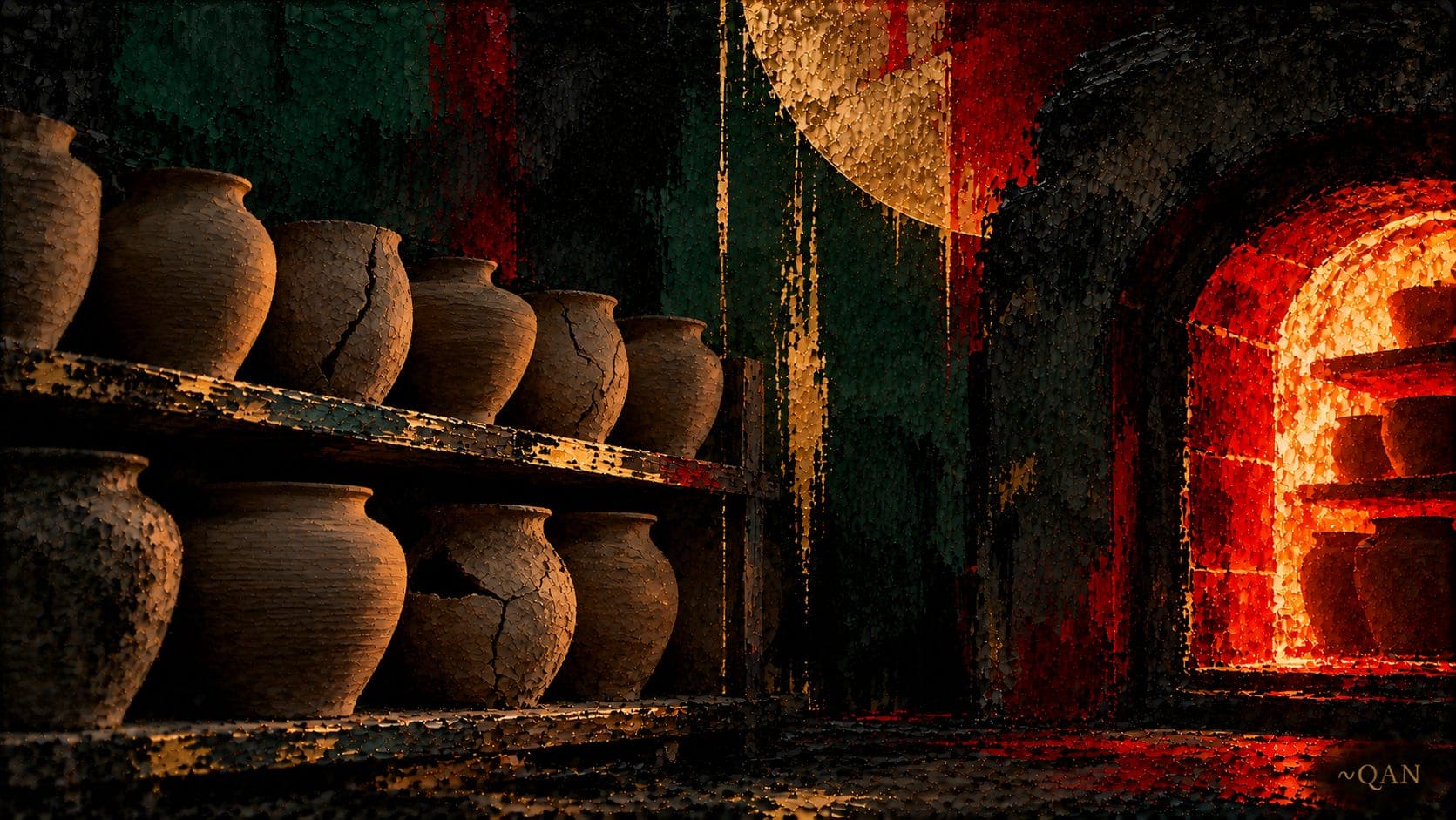
The potter loads the shelf twice a week. Same clay, same hands, same kiln. She sets the dial to the same number every time and closes the door.
An hour later she opens it and finds what she always finds. Some pieces come out whole, ringing when tapped. Others come out with hairline cracks running through the base, the fire finding what the eye never could.
For years she blamed the kiln. Uneven heat, a weak element near the back shelf, a draft from the door seal. She checked the readings. The temperature held steady across every rack, front to back, top to bottom. The fire had not favored anyone.
What she found instead was in the clay. A pot she wedged quickly, in a hurry to get to the next order, still carried pockets of trapped air. The heat did nothing to those pockets except find them. It expanded what was already hiding inside, and the pot split along the line where the air had been sitting the whole time.
So she started wedging longer. She ran her thumb along the walls of the greenware before it ever touched a shelf, tapping the base to listen for the flat, dull sound that meant a hidden thin patch. Weeks went by with fewer cracks, and she let herself believe that careful hands could promise a whole pot every time.
Then one came out split anyway, from a spot she had pressed and checked twice, one of a matched pair ordered as a wedding gift. Some faults sit too deep for a thumb to find. Only the fire finds them.
The kiln has never once asked what a pot deserves. It exposes what was already there, the part her hands caught and the part they missed.
She still loads the shelf twice a week. Same clay, same hands, same fire. She still wedges longer, still runs her thumb along every wall, checking for what her hands can still catch before the door closes.
Same shared exposure shows up with old wiring in The Fire Marshal Never Checked the Other Houses, where the danger was never about who occupied the house.