The skillet came home wrapped in plastic, dull grey, cold to the touch, smelling faintly of the factory oil still on it.
Nothing browned in it. Eggs stuck. Onions caught at the edges and burned before they softened.
The shopkeeper had said one thing, wipe it with oil after every wash, never soak it, never scrub it hard.
A thin layer. Every time. Nothing more.
For the first two weeks it stayed grey in most places, dark only where the oil kept returning.
One evening a guest cooked in it, deep frying pakoras in nearly half a cup of oil, filling the pan almost to the rim.
Afterward it looked transformed, black and glossy, coated thick.
By the next wash most of that shine had lifted away with the scrub brush, back to grey underneath.
The daily wipe, barely a spoon's worth, kept building instead, one thin layer baked in by the next meal's heat.
Three months in, a steel wool pad came out during a deep clean.
It stripped the surface in most places back toward grey.
Near the handle, where a hand had rested and pressed slightly harder with every wipe, the dark patch held. The wool passed over it four times and left it looking almost the same.
Rice stopped sticking near the center after that. An egg slid rather than tore.
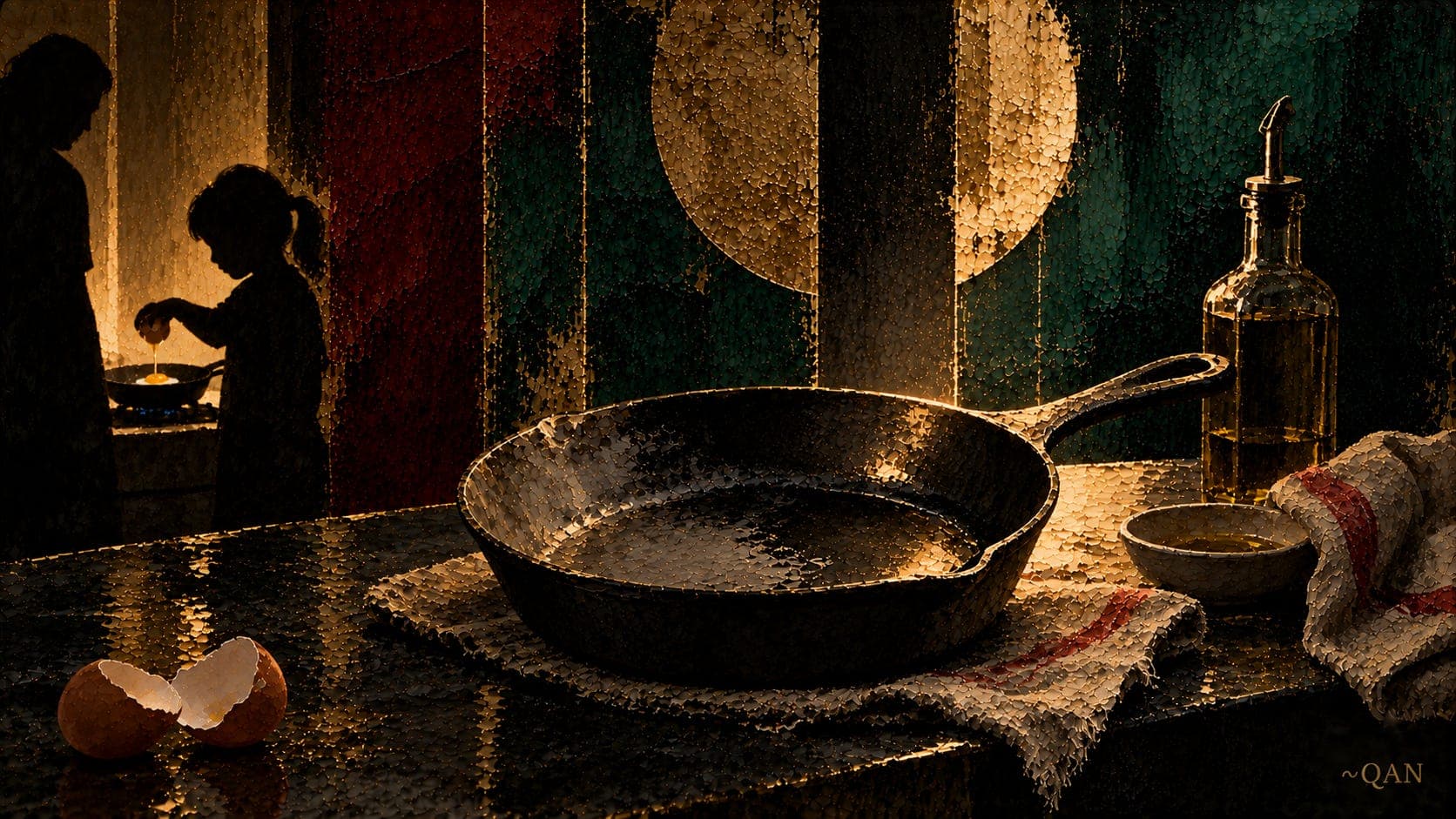
Months later a child cooked an egg in it for the first time, alone, before school, with no one to tell her about the wiping, the guest's ruined pakoras, or any of it.
The egg came loose from the pan on the first try, clean, whole, sliding onto the plate the way she had seen it done a hundred times without knowing why it worked.
Her mother stood at the stove behind her and said nothing, watching the egg slide free on its own.
She rinsed it, dried it, and without being asked, ran a thin film of oil across the surface before putting it away.
Same pattern shows up with a bridge in The Bridge Nobody Noticed Breaking, where the distance grew across many ordinary days that crossed the same quiet gap.