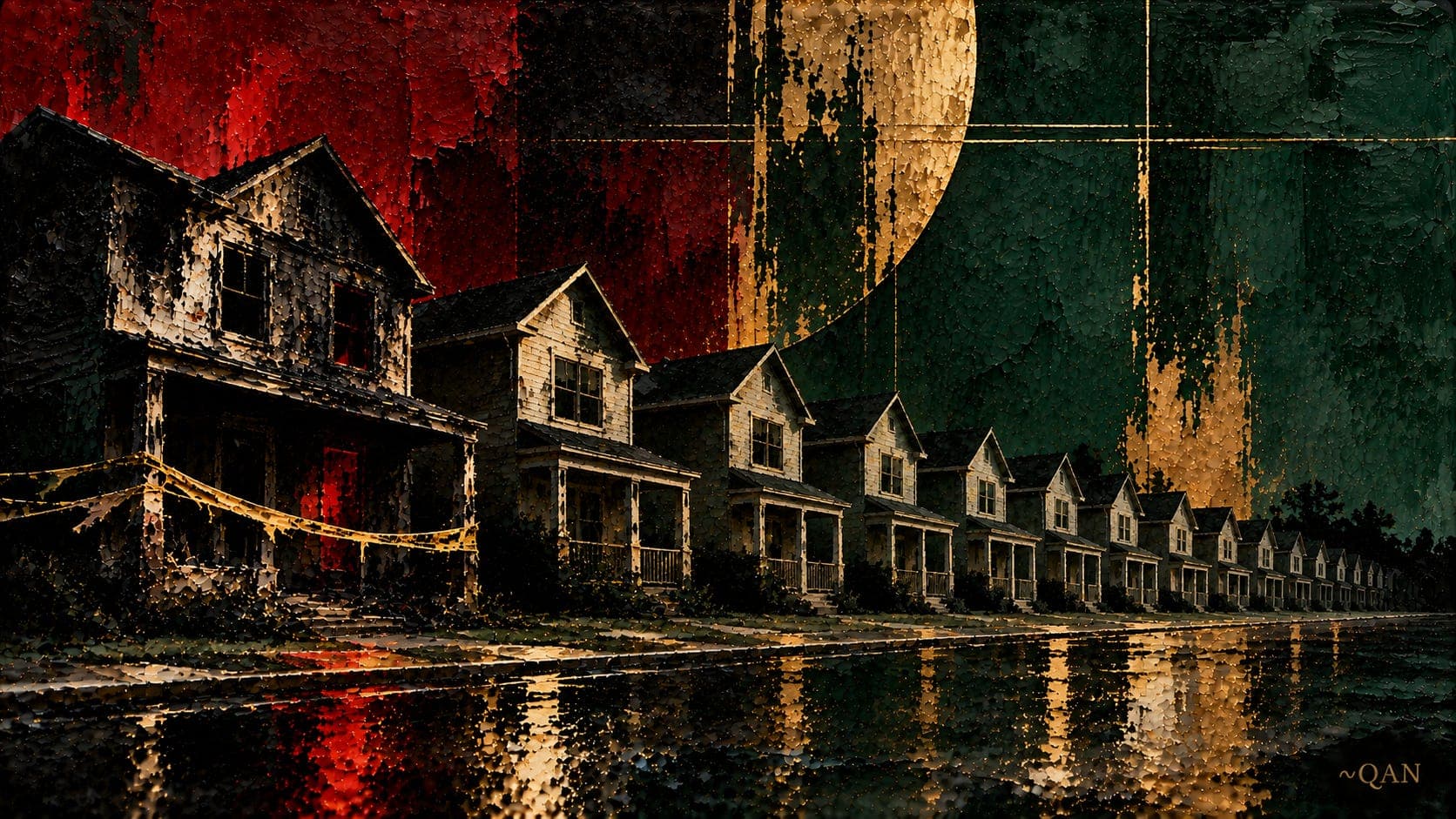
By the second week the tape had started to sun-bleach along the top edge, fading first where the porch caught the most light.
The tape stayed up. No new sign went up either.
The street had gone back to normal in the way streets do. Bins out on Tuesdays. Sprinklers running before seven. The porch post still carried a single word stapled to it, corners curling now. Condemned.
The report had gone around in the first week. Overloaded circuit. A space heater left running through the night. Wiring original to the house, forty years old, never once inspected.
By the second week the report itself had stopped coming up. What people mentioned instead was the family, mostly with a decision attached.
Should have called an electrician years ago.
Always wondered about that porch light, the way it used to flicker.
The nodding has a shape to it. A name. A decision someone else made, alone, on a night that belonged to just that kitchen.
No one goes inside to check their own panel.
Every house on this street went up the same year.
Same contractor. Same crew, working down the block through one long summer.
The details blur by the second telling. Only the permits agree. One electrician for the whole street, the original inspection records all carrying the same year.
The report names a decision. A heater, plugged in, left on. That is a choice, and choices are easy to disown. Say I would never do that and the fire moves a little further away.
The wiring was never a choice. Nobody standing on this lawn chose the copper behind their own walls. It arrived the year the house did, sealed in before anyone signed a mortgage on it.
A choice can be judged and dismissed. A shared wire can only be inspected.
The fire marshal's report ends at the property line.
It answers what happened in that kitchen, on that circuit, that night.
It was never asked whether the same copper is still carrying current behind forty other walls on the same street, in houses that look nothing like a crime scene.
How old is the wire behind your own outlet. That question had no answer on this street. Not yet.
A week later, one neighbor goes down to the basement before bed.
Opens the panel cover with a screwdriver.
Looks over the breakers for scorch marks, a smell that shouldn't be there, anything darker than the metal around it.
The panel looks the way panels are supposed to look. Closes the cover. Leaves the basement light on anyway, walking back up the stairs past a window that still faces the yellow tape down the street.
Same distance builds up on an ordinary street too. It shows up with a rumble strip in The Strip That Only Worked on the Old Van, where comfort turned out to be the thing standing between a driver and the correction he needed.