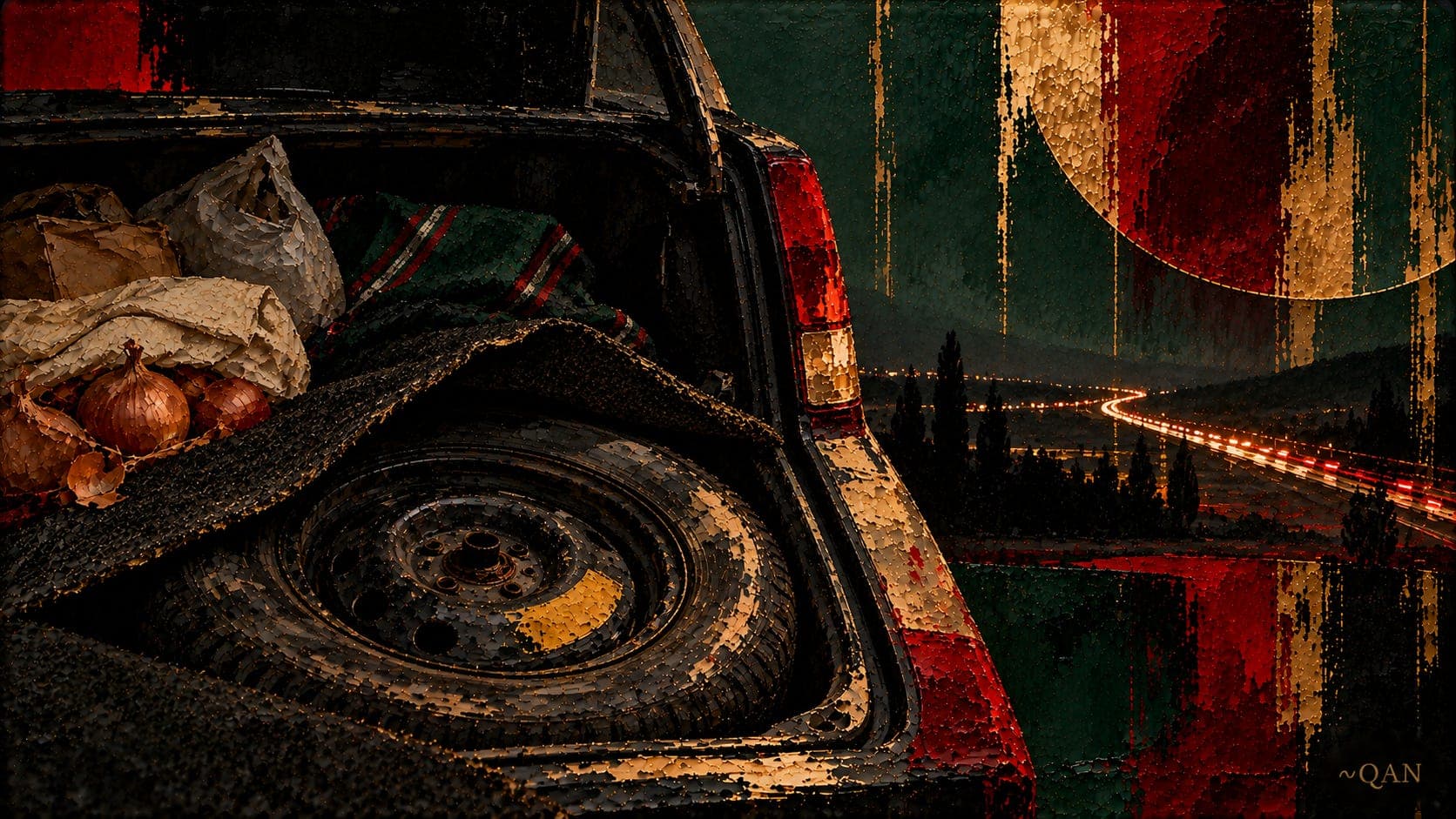
For six years the spare wheel lay in its well under the boot carpet, tread untouched, wearing a yellow sticker its owner had never read.
Groceries rode on top of it.
So did a folded blanket, and a bag of onions that split one August.
Then came the flat, twenty minutes into a drive north to a friend’s house.
No streetlights.
A wing nut cold enough to hurt.
The phone held in his teeth for light.
The small wheel went on, and that whole corner of the car dropped an inch and stayed there.
He read the sticker once, by the phone.
TEMPORARY USE ONLY.
Under it, two limits. Fifty miles an hour. Fifty miles in all.
The drive north was a hundred and sixty.
He called the friend and said next weekend, once the tyre was sorted. Then he turned the car around and drove home at forty with the hazard lights ticking, thanking the little wheel out loud, twice.
The garage could fit him in on Thursday.
On Thursday the car ran fine.
It ran fine the Thursday after that.
The small wheel hummed half a note above the other three. By March he could no longer hear it.
Every Sunday he checked its pressure with a pocket gauge. Sixty pounds, the figure printed on the wheel. The four proper tyres went unchecked until one of them looked soft.
At dinners he told the story of that night. By the fourth telling it was raining.
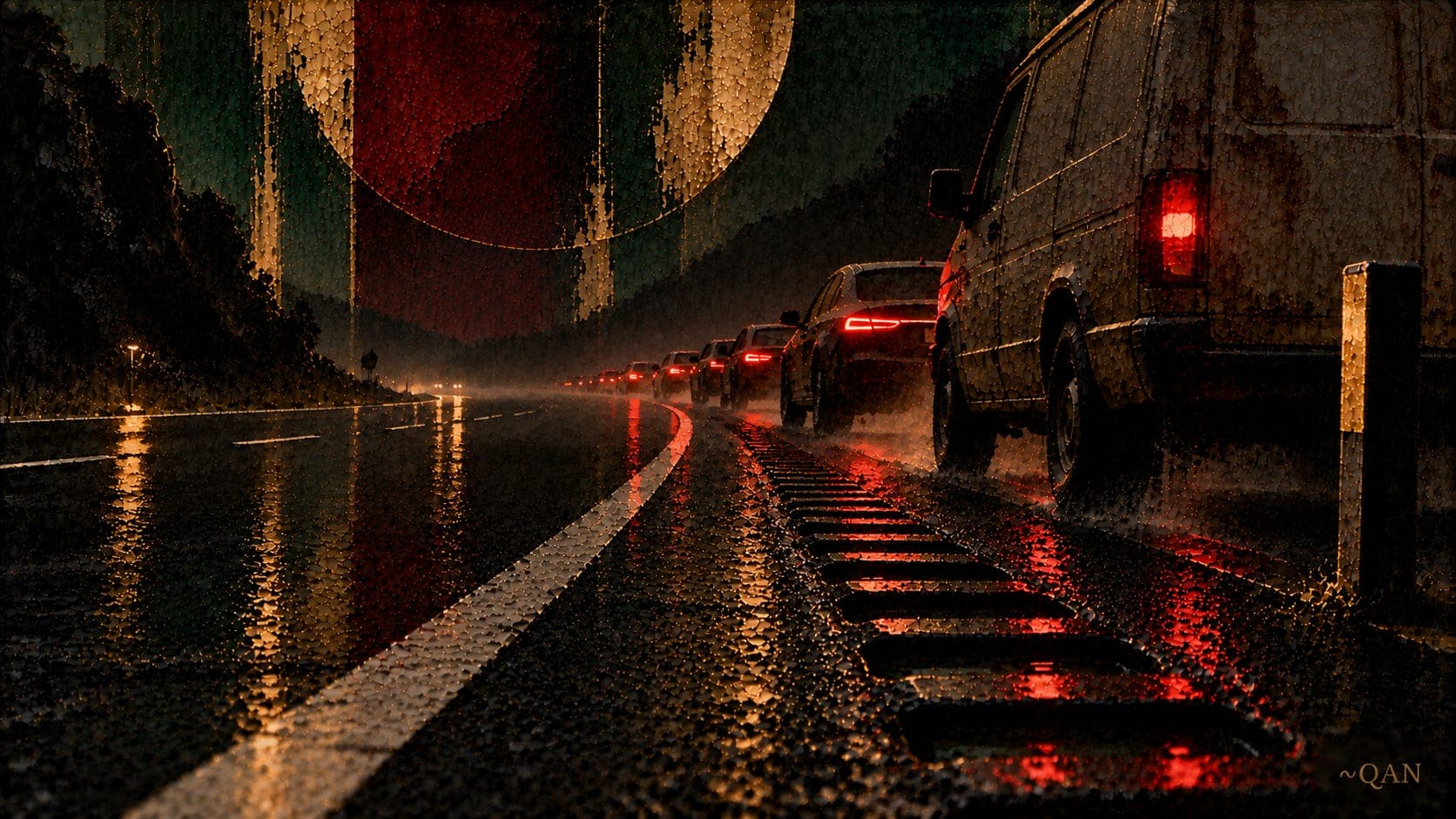
The highway went first.
From the old road he could still see it across a field, headlights moving in one long even thread at speeds the wheel had never agreed to.
He said the old road had poplars, which it did. By the second winter he was saying he had never cared for fast roads.
By then the friend in the north called only on birthdays, and left a small pause where the invitation used to go.
Each time he gave the same answer. Once the tyre was sorted.
The wheel kept its side of it. It never once complained. On the night of the flat it had taken him home to his own bed, off a dark road.
A limit that never gets questioned soon passes for a preference.
On a Sunday in the second spring he knelt by the wheel with the gauge. The needle stopped at sixty, as it always did. The tread across the middle had worn to a shine.
He wiped the road film off the sticker with his thumb, meaning only to see whether it was still there.
Yellow came up first. Then the numbers.
Fifty. Fifty.
He stayed on his knees until the driveway had soaked through his trousers.
On Monday the garage had a proper tyre on by noon. The mechanic lifted the little wheel off the hub, turned it in the light, read the sticker, and asked how far it had carried him.
Eleven thousand miles, and some.
The mechanic said nothing. He set the wheel down on the concrete, gently, and went to print the bill.
While it printed, the man took out his phone and wrote to the north.
Tyre’s sorted. Saturday?
In the car park he lifted the boot carpet himself and laid the little wheel back in its well.
The sticker went dark under the carpet, still saying fifty.
By evening the groceries were riding on top of it again.
Same instinct shows up with a whetstone in The Stone That Wears Down First, where a blade kept cutting long after its edge had gone wrong.