He checked the rope the way he'd been taught.
Run your palm along the sheath.
Feel for burrs, feel for flat spots, feel for heat damage.
The sheath came back clean every time.
Clean enough to trust.
Clean enough to load again.
Clean enough to hand to someone else without a second thought.
The rope had held on the last four climbs.
It had held through the overhang, through the two falls, through the night pitch that everyone still talks about.
Four times was starting to feel like proof.
The core carries the weight.
The sheath just protects the core from the sun and the rock.
Nobody at the gear shop mentions what happens between those two layers.
He kept using it.
It kept holding.
Each pitch became a small piece of evidence for a case that was never actually being tested.
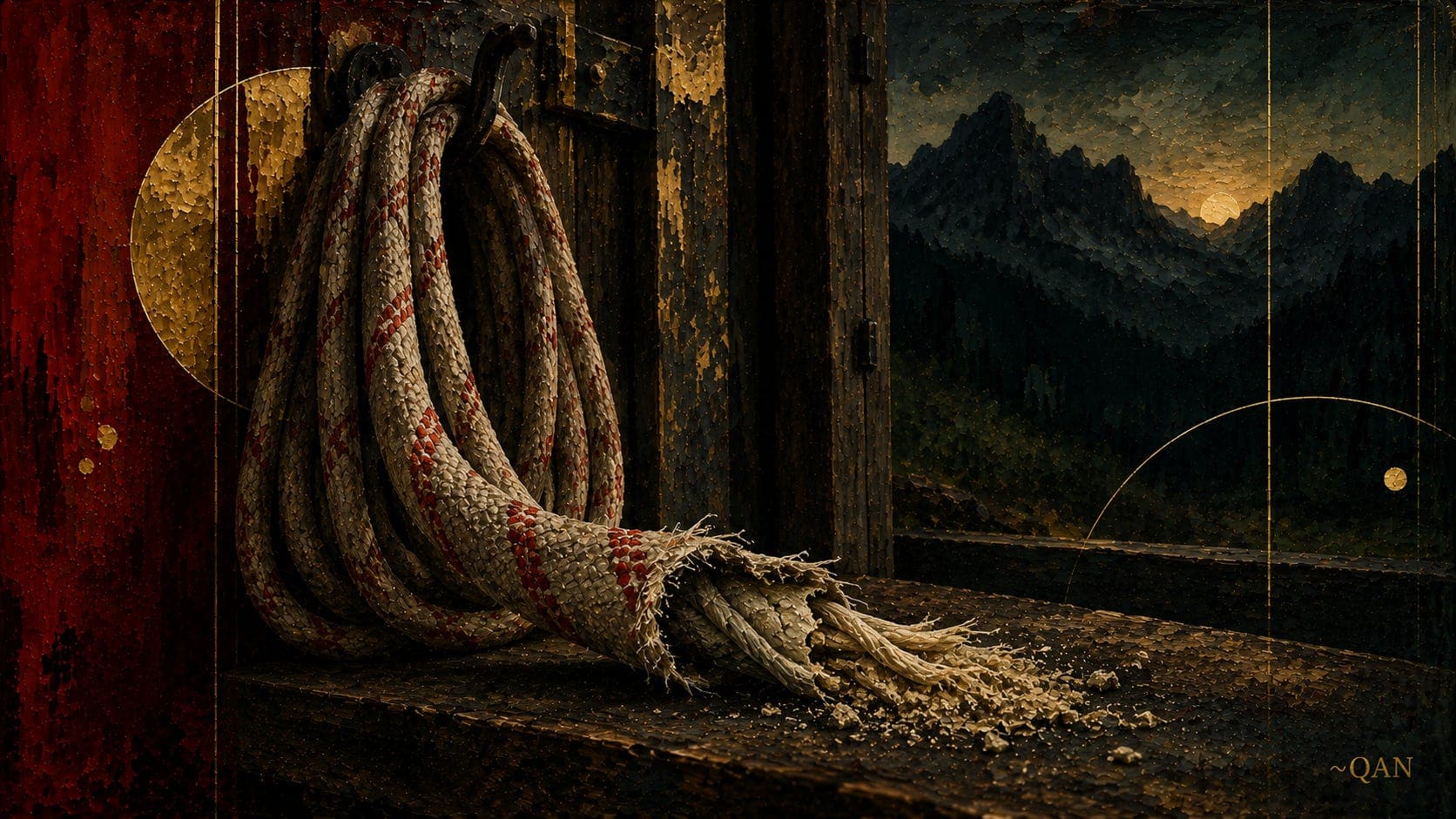
Somewhere in the fourth month, a friend cut a cross section from a retired coil. Same brand, same age, stored the same way.
The sheath was immaculate.
The core inside was crushed into powder, strand by strand, from thousands of small loads nobody had counted.
His first instinct was to test everything he owned.
Cut a section off every rope, check every core, trust nothing on sight again.
But you cannot cut a rope to prove it and still climb on it.
The test that reveals the truth is the same test that destroys the thing being tested.
So he stopped asking the rope how it felt.
He started asking it how long.
Now he retires ropes by their age, their use, and the maker’s guidance, not by feeling alone.
He still runs his palm along the sheath before every climb.
He still feels for burrs, still feels for flat spots.
He just doesn't call it proof anymore.
He calls it a habit, and hangs a new coil by the shed door before the old one ever gets the chance to answer for itself.
Same mistake shows up with a bridge in The Bridge Nobody Noticed Breaking, where nobody could name the exact day the gap opened.