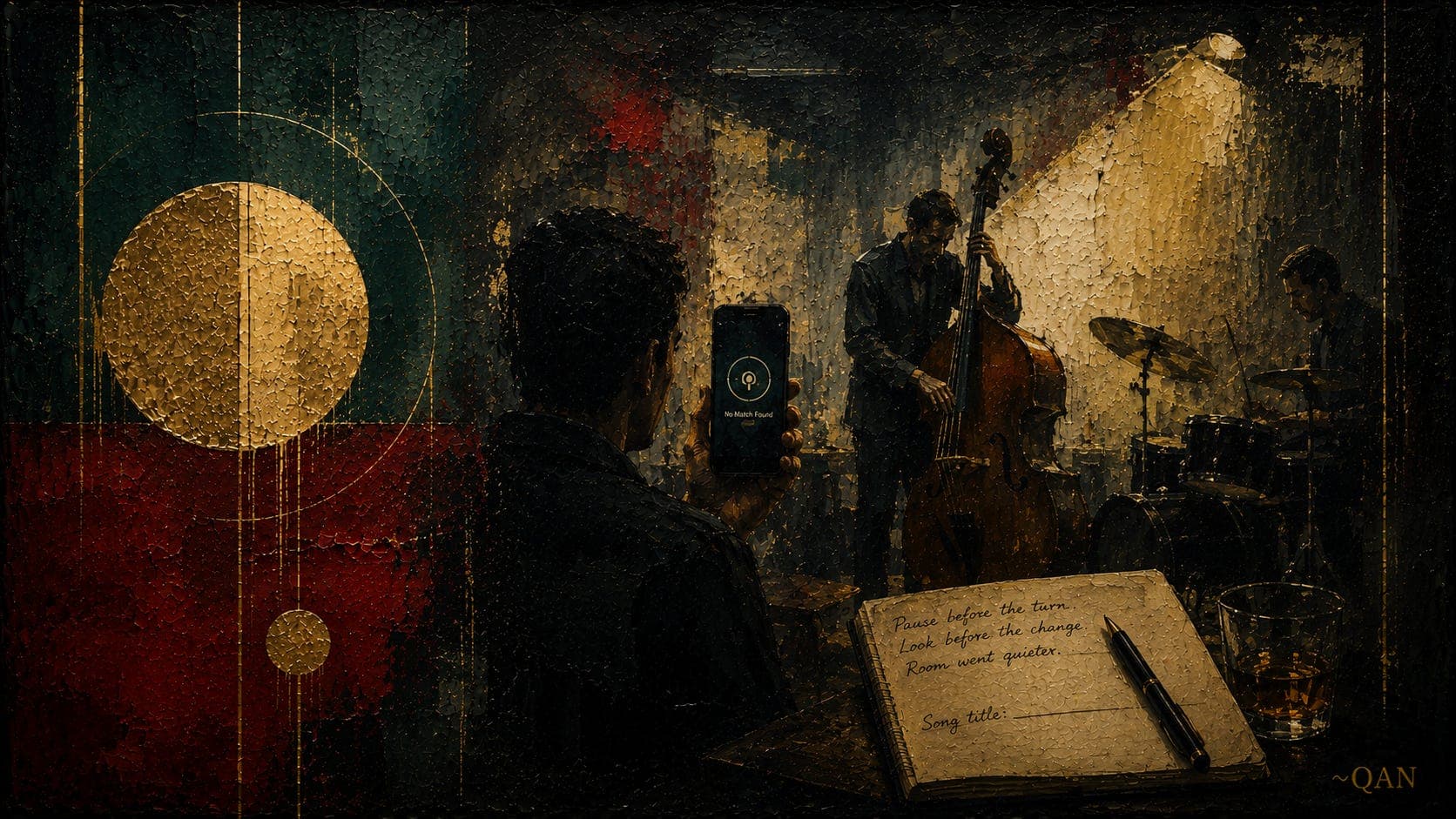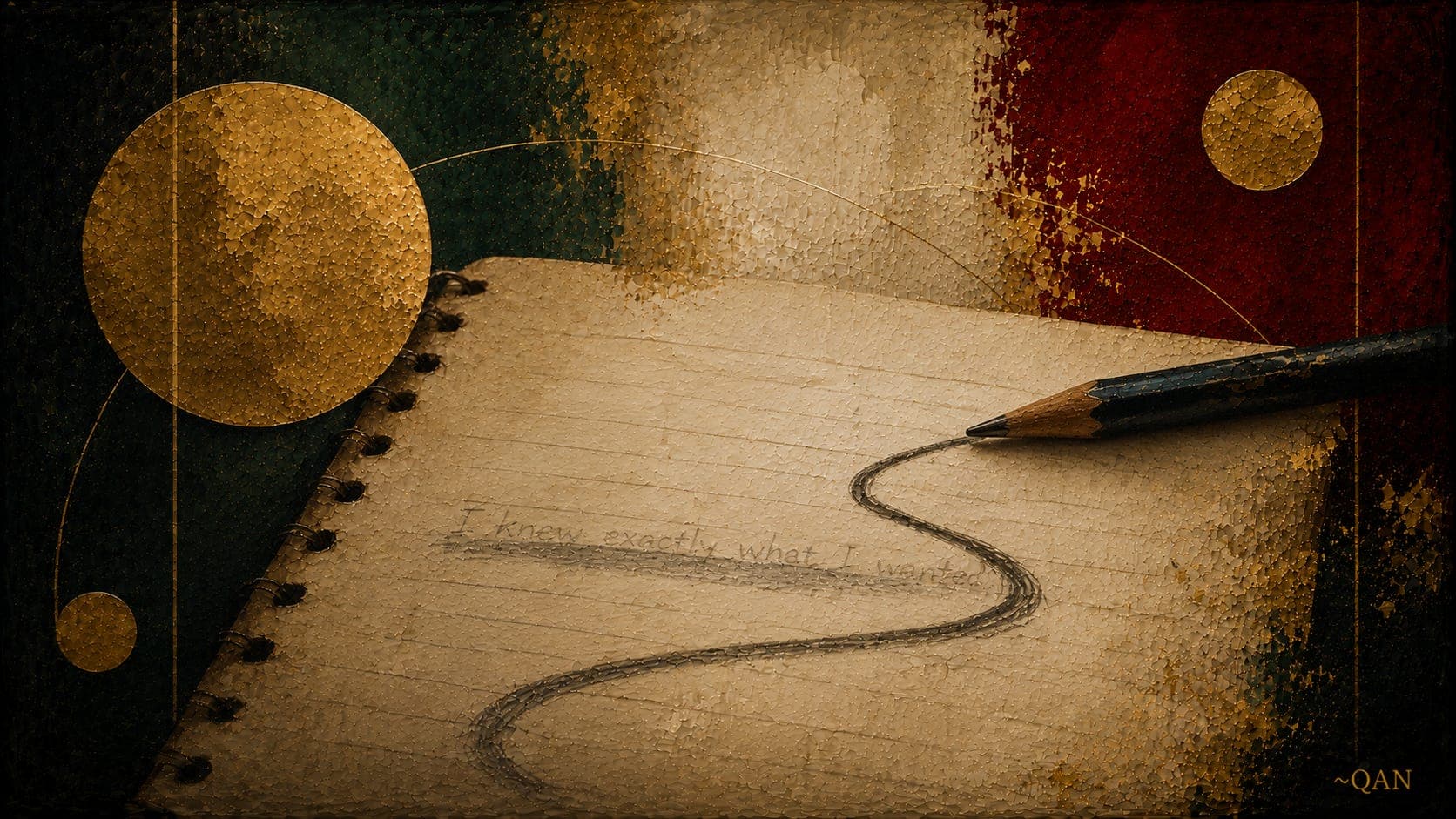
A pencil can change direction without lifting from the page.
The line turns.
It bends around a word. It crosses a margin. It begins again somewhere the hand did not expect.
From a distance, the change looks small.
Up close, the first line is still there.
It has been rubbed until the paper shines. A grey trace remains in the grain. The page remembers the pressure even after the sentence has been removed.
That is the part correction rarely mentions.
The new line does not arrive on an untouched page. It has to pass through the old one.
A person can discover that a certainty was borrowed. A habit was quietly making the decisions. A life was being held together by an explanation that no longer held.
The truth may be clear.
Still, the hand hesitates.
What will have to be erased? Which promises were built around it? Who will notice the empty space? What remains of a person after the sentence they used to introduce themselves has been crossed out?
The mind often protects an old direction by calling the cost a warning.
But a cost is not always evidence of a mistake.
Sometimes it is only the sound of a page being cleared.
The pencil does not argue with the line it leaves behind. It works over it. Slowly. Until the paper can carry another sentence.
Even then, the first direction has not become meaningless. It has become part of the page the new direction must inherit.
This is why changing course can feel like losing a life that is still standing.
The room remains. The names remain. The morning still arrives through the same window. Yet the hand has stopped writing toward the old ending.
No one else may see the moment.
There is only the slight pause, the pressure lifting, the point turning elsewhere.
A changed direction does not erase the person who began walking. It reveals the mark that person was willing to leave behind.
And sometimes the cleanest page is the one that still shows how it was changed.
If you have ever mistaken a longer route for a wrong one, The Shortcut waits nearby. If the turn changed more than your destination, The Person Who Arrives Shouldn’t Be The Same Person Who Started follows the footsteps.