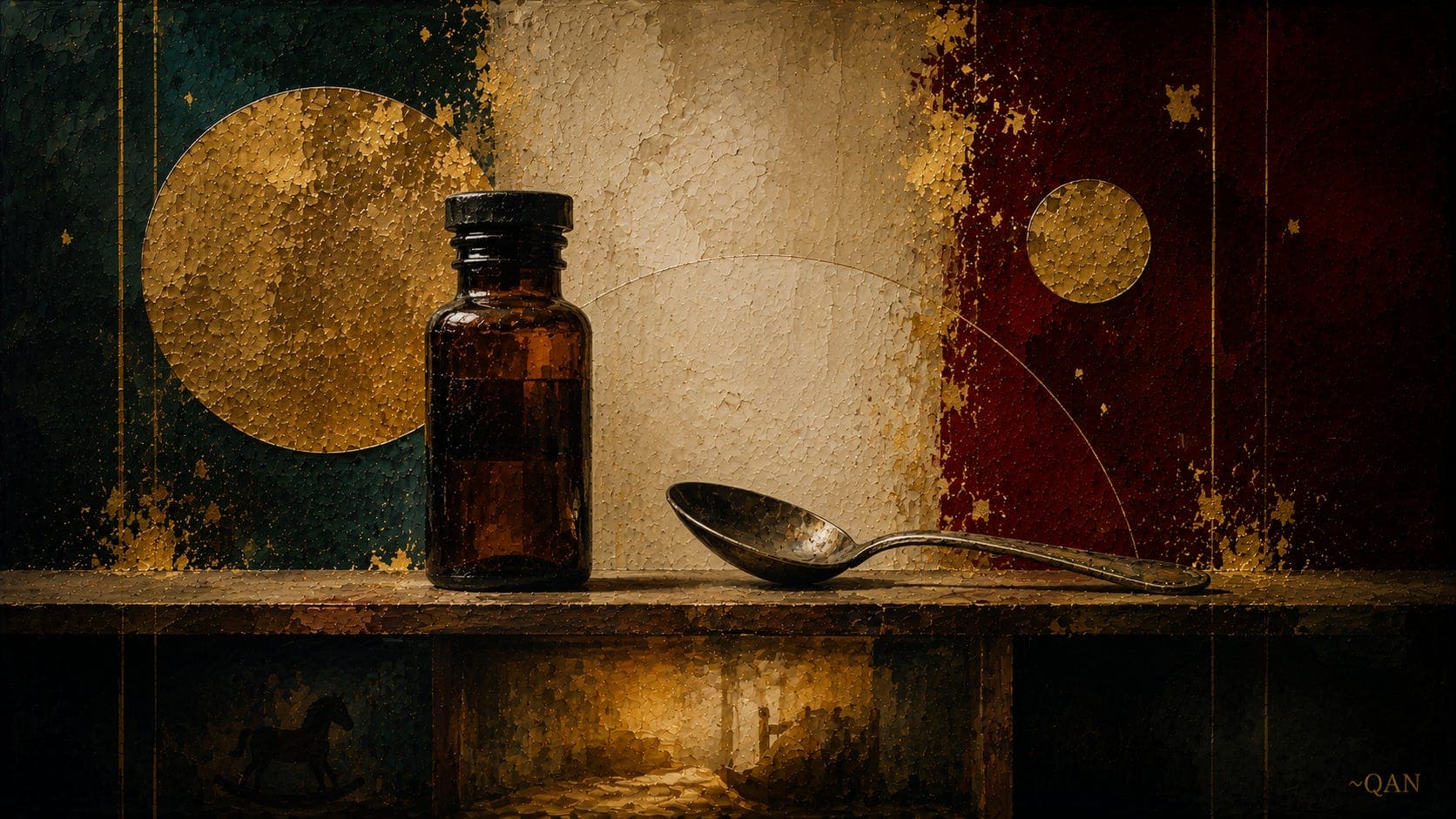
The medicine came in a brown bottle, kept on the top shelf behind the sugar so the children would not reach it by mistake.
I was one of those children.
The spoon had a dent in its bowl, worn there by years of tapping against the rim.
It tasted the way regret feels.
Sharp at first, then spreading, then refusing to leave.
The child spat it out on the first day.
He was three, maybe four.
He had one word for everything that reached his tongue: bad.
He was right, in a way.
The medicine was bad, to the tongue.
The tongue never lies about contact.
That is all it knows how to measure.
It just never tells you about the rest.
It took me years to notice what happened next.
The rejection changed nothing.
The medicine had already passed his tongue, and it went to work where taste cannot reach.
The chest loosened.
The fever came down.
The body healed in the dark, the way a room straightens itself while you sleep.
The child never agreed to any of it.
We read our lives the way the child read the spoon, judging everything by its first taste.
A door closes, and the taste arrives before the meaning does.
A plan fails, and the report comes in: bad.
How many cures have we already spat out?
How many of them kept working while we complained?
The cure was working before you agreed to let it.
It does not wait for your belief.
It works in the dark, below the tongue, where no opinion can reach, and one morning you are well, and you never once said yes.
The bottle is empty now.
The spoon is back in the drawer, still dented.
The child is older, and he takes his medicine without being told.
Somewhere in him, the verdict finally learned to wait for the body.
If your tongue ever handed down a verdict before your body did, The Judge Who Never Read the Evidence sits close by, where the verdict arrived before the evidence did. And The Dirtiest Lens Always Feels the Cleanest, where the view you blamed was only ever the glass.