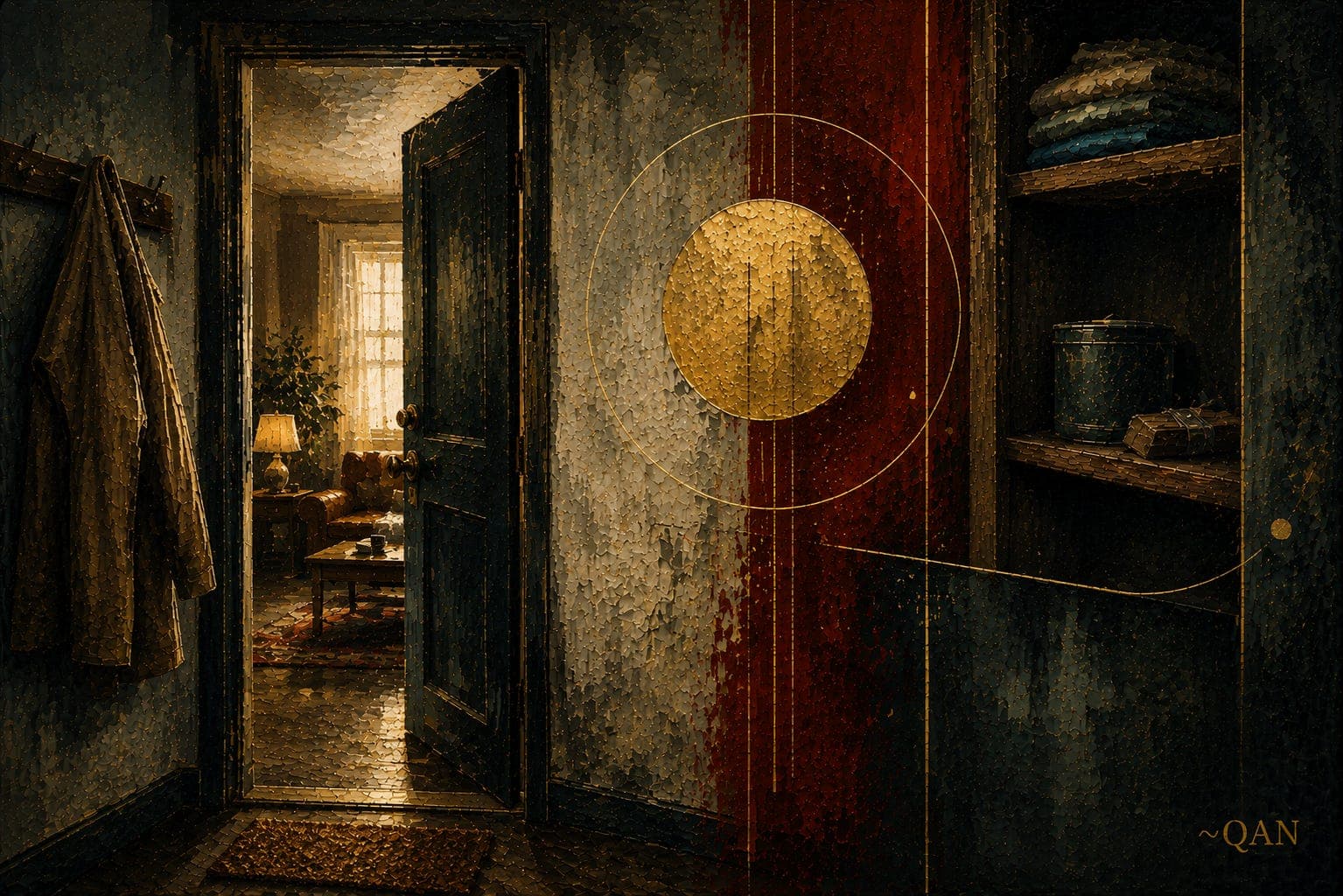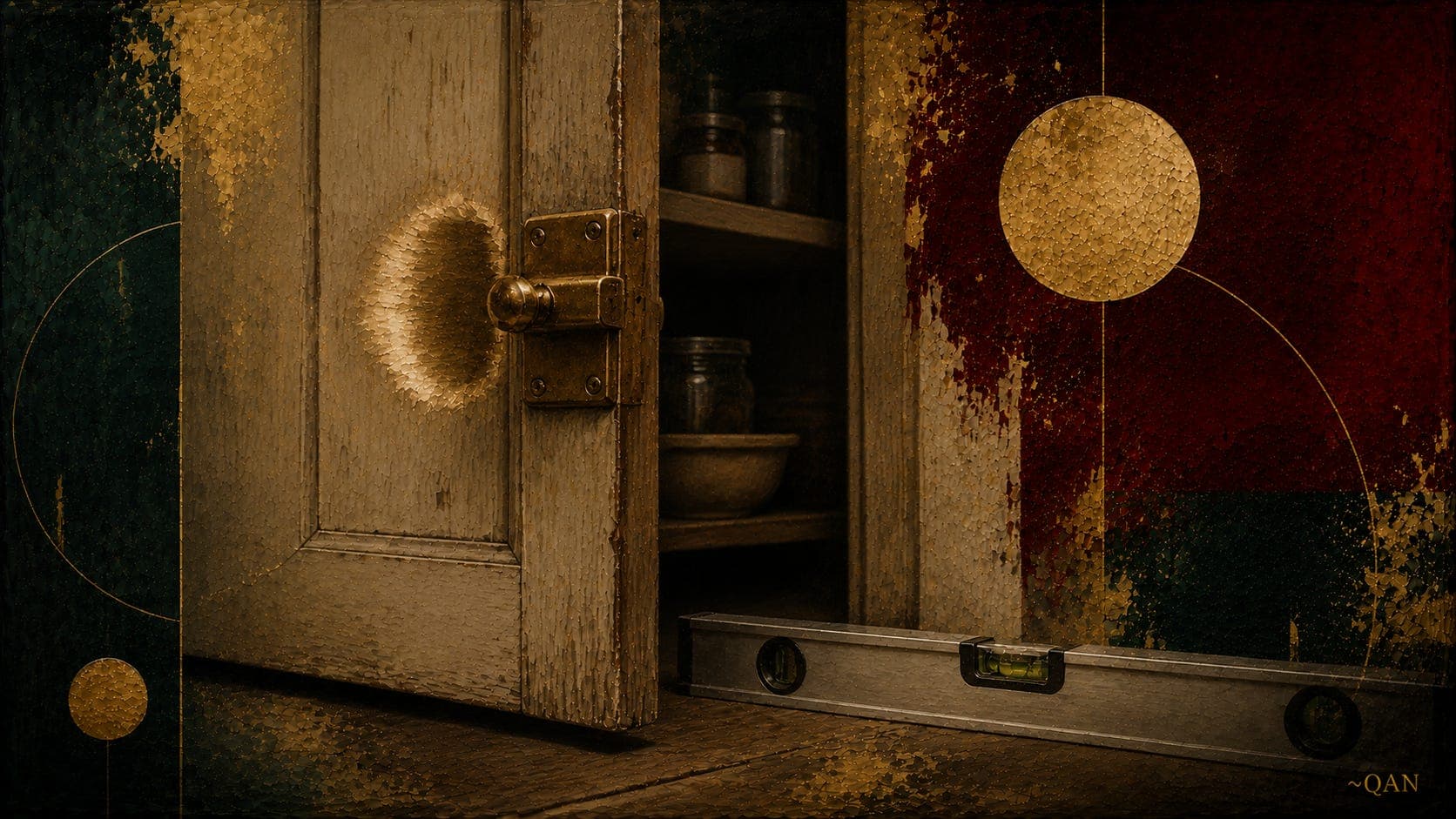
The heavy brass latch of the pantry door carries a pale, polished hollow where thumbs have rested for decades.
The door once closed with a single, weightless sweep of the hand.
Then one monsoon, it needed a fraction more force.
Someone oiled the hinges.
It worked for a week.
Then it demanded the push back.
Someone sanded the lower edge where it met the wooden frame.
Easier again, for two weeks.
Then the resistance returned, firmer than before.
Few thought to check anything beyond the door itself.
Why would they?
The door was the thing that stuck.
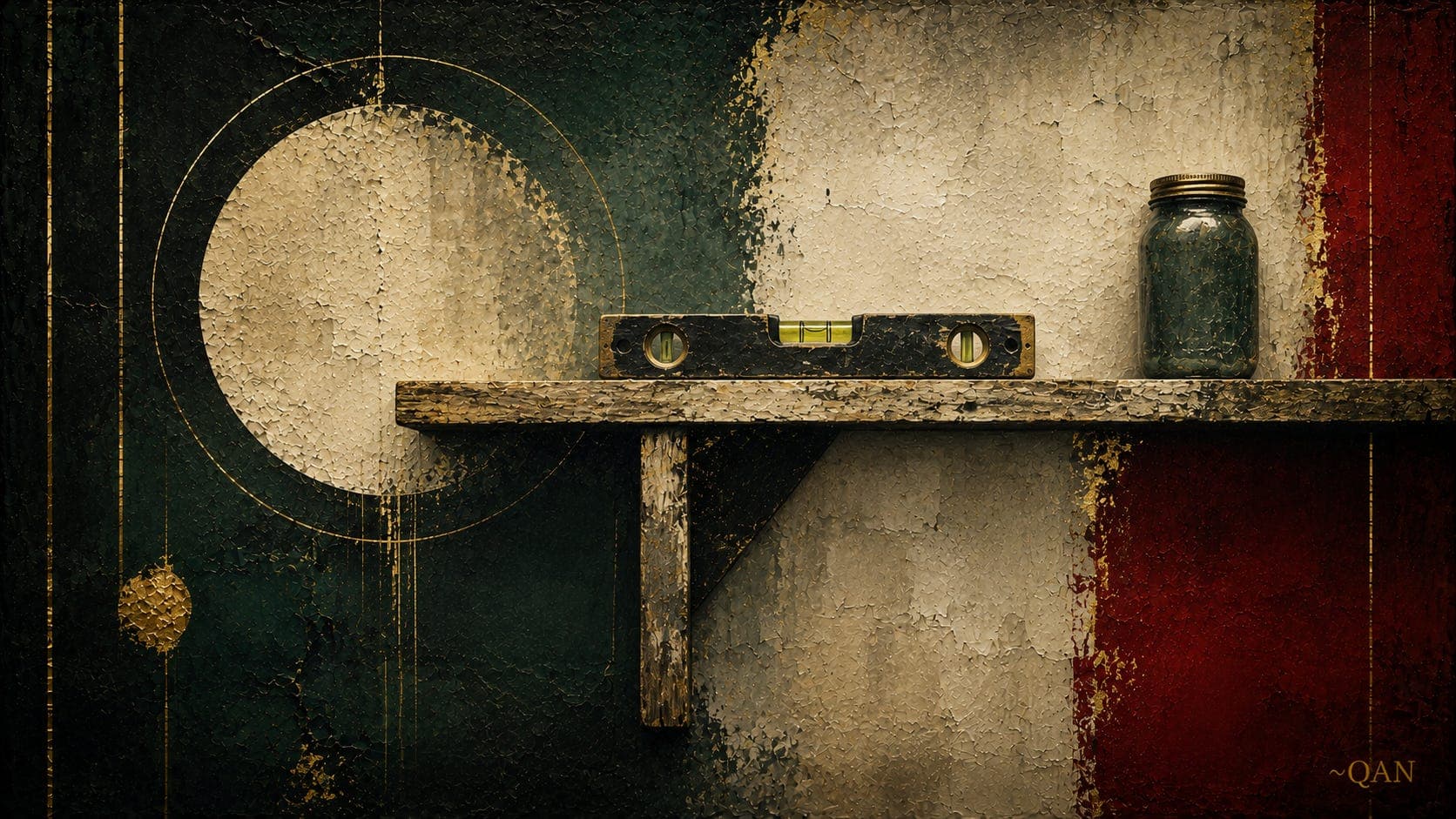
A carpenter came for a shelf in the same room.
He set his aluminum level against the floor without being asked.
The floor tilted, just barely, toward the far wall.
It was a shift of millimeters.
Nothing a person would notice while walking.
Yet a door frames itself against the ground it stands on.
When the earth moves, even slightly, it alters what the door encounters at every sweep.
The door had not weakened.
It had simply been telling the truth about the tilt for two years, one push at a time.
How many things get sanded, oiled, and adjusted before anyone checks what they were responding to?
What does it take to stop confusing effort with an answer?
The latch is still heavy.
The wood still remembers the friction.
The level sits on the floor, perfectly still.
If you've ever wondered why we treat the loudest symptom as the whole problem, The Finished Puzzle sits close by, where completion can make the wrong direction feel like progress. And The Bent Needle, where a direction can feel right long after the compass has stopped being true.