The harbor crew loads the hold before dawn.
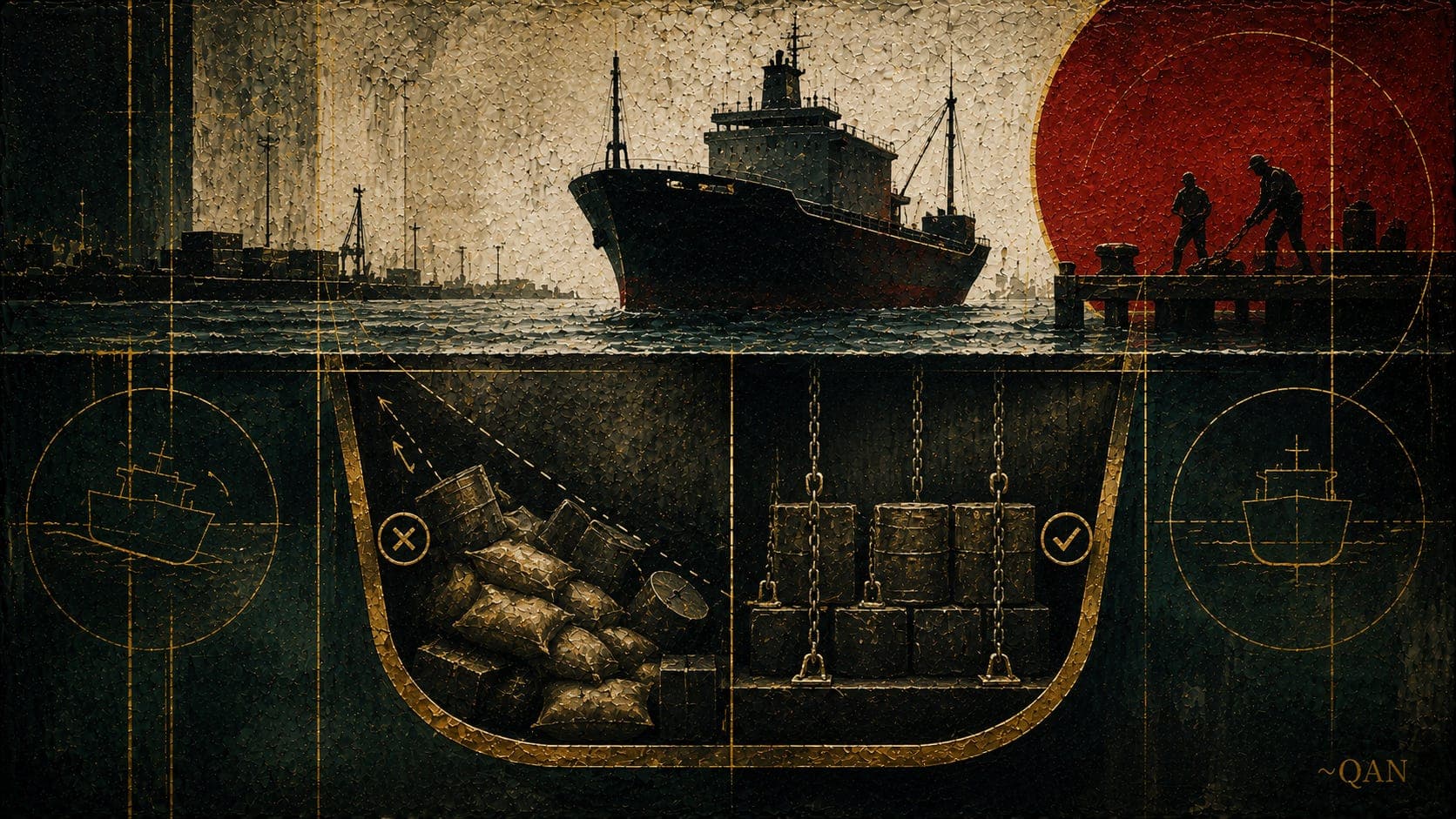
Sandbags. Iron blocks. Drums of water.
Nobody watches this part. It isn't the interesting part.
The captain checks the hull. The engineers check the engine. The weight at the bottom just sits there, doing nothing anyone can see.
Some crews chain it down. Bolt it to the ribs of the ship.
Other crews stack it and move on. Faster. Cheaper. The ship sits the same in the harbor either way.
You cannot tell the difference by looking. Not in calm water. Not from the dock.
The test comes later. Usually from something smaller than a storm.
A hard turn. A wave from the side. The kind of thing a ship should shrug off.
If the ballast is bolted, it holds its ground while the ship leans, and pulls the ship back level.
If it isn't, it slides.
It slides toward the lean. Adds its weight to the tilt instead of against it.
Ships have capsized this way in water so calm the coast guard couldn't explain it later. No storm in the report. Just cargo that moved.
There is a test for this. Before a ship ever leaves the dock, harbor engineers rock it on purpose. A small deliberate tilt, side to side, timed and measured. They are testing something specific. Whether the weight inside stays where it was put.
Weight only steadies a ship when it can't move.
The crews that skip the bolts save an afternoon. Most of the time, it doesn't matter.
Then, somewhere past the breakwater, a wave hits at the wrong angle, on an ordinary Tuesday, on a ship that looked exactly as sound as the one beside it.
The crew that bolted it down does something almost boring.
Wrenches. Chain. A checklist before the ship ever moves.
Then the turn comes.
The hold stays quiet. The deck comes back level.
Nobody in the harbor even notices.
Same invisible-load instinct shows up with a house in The House with Perfect Rooms but No Hallway, where the missing piece never showed up in any single room, only in how the whole thing moved.